 Pololegens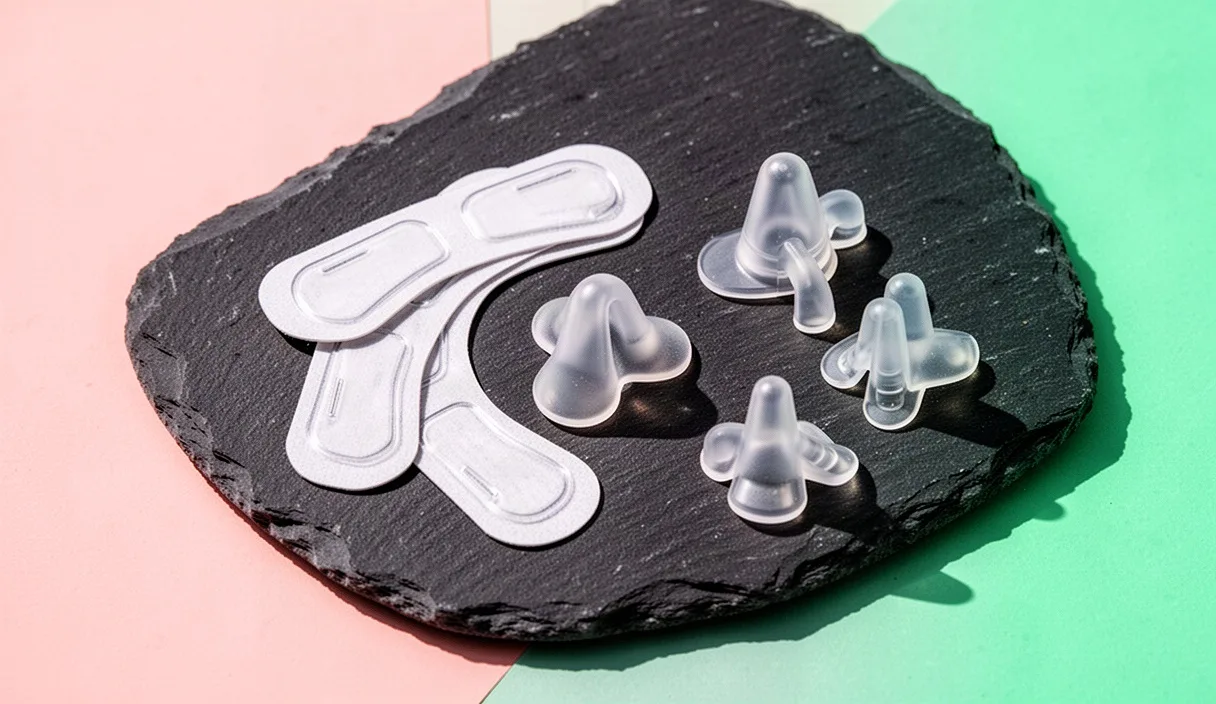
Nasal breathing determines airflow to the lungs. Many athletes and people with breathing difficulties during sleep face mechanical obstructions in the anterior part of the nose. Nasal strips and internal dilators were developed to open this passage non-invasively. At the counter, we often see people expecting a simple accessory to resolve every oxygenation issue. The reality depends on the exact location of the obstruction.
Clinical research has examined these tools for three decades. The data shows clear changes in the mechanical resistance of the nasal cavity, but results differ between rest, strenuous exercise, and nighttime sleep. Below are the measurements, anatomical limitations, and the mode of operation of each device, so you know what to expect before investing in disposable or reusable aids.
Anatomical narrowing of the nasal valve
The nasal valve is the narrowest point of the entire upper respiratory tract. It is divided into the internal and external valve. The internal valve is formed by the nasal spine, the nasal septum, and the lower edge of the upper lateral cartilage. In a typical Caucasian nose, the angle in this area ranges between 10 and 15 degrees. If the angle is less than 10 degrees, air intake is drastically restricted.
According to Poiseuille's law, resistance to fluid flow is inversely proportional to the fourth power of the conduit's radius. This means that even a minimal narrowing of 1 millimeter in the valve area significantly increases the required inhalation effort. When inhaling deeply, negative pressure develops inside the nose in accordance with the Bernoulli principle. If the lateral cartilages lack structural rigidity, the nostrils collapse inward and close the airway.
Obstruction at this site is caused by several factors:
- Deviated nasal septum in the anterior section.
- Hypertrophy of the inferior nasal turbinate head.
- Weakness of the lateral nasal cartilages due to age or trauma.
- Natural narrowness due to inherited facial structure.
When the obstruction is situated further back, such as in the middle turbinates, adenoids, or soft palate, mechanical dilators offer no relief. Their action is strictly limited to the first 2 to 3 centimeters of the nasal passage.
Mechanical function of external spring-loaded strips
External nasal strips consist of two or three parallel bands of flexible plastic (usually polyester) embedded in an adhesive substrate. The product is applied across the bridge of the nose, just above the flare of the nostrils. When the strip is pressed onto the skin, the plastic bands are forced to bend. The elastic recoil of the plastic exerts a continuous outward pulling force.
This pulling force lifts the nasal flare and moves the lateral nasal walls away from the septum. Rhinomanometry studies show that applying the strip increases the minimum cross-sectional area of the nasal valve by an average of 0.05 to 0.12 square centimeters. This structural change results in a 22% to 31% reduction in total nasal airway resistance in individuals with symptoms of nasal valve narrowing.
For the strip to work properly, application requires specific actions:
- Washing the nose with soap and water to remove skin oils. Rubbing alcohol works best for oily skin.
- Drying the skin thoroughly with a clean towel. Any trace of moisture compromises the adhesive.
- Peeling off the protective liner without touching the adhesive surface in the center.
- Positioning the strip just above where the nostrils flare, not high up on the bony nasal bridge.
- Applying firm pressure with your fingers for 15 seconds, focusing on both ends of the strip.
Strip failure is almost always due to incorrect placement. If placed too high, over the nasal bones, it exerts pressure on rigid tissue that cannot move. If placed too low, it constricts the nostril opening instead of dilating it.
Internal silicone dilators: advantages and disadvantages
Internal dilators are inserted directly into the nasal vestibules. They are typically made from medical-grade silicone, thermoplastic elastomer, or polymer mesh. Their design features two cylinders, rings, or anatomical wings connected by a small bridge that rests beneath the nasal septum.
Unlike external strips that rely on adhesion to the skin, internal dilators work through direct mechanical stenting. They push the internal valve wall from the inside out. This prevents tissue collapse during inhalation, even under conditions of intense negative pressure.
| Feature | External Nasal Strips | Internal Silicone Dilators |
|---|---|---|
| Mechanism of action | Outward skin traction | Direct internal cartilage support |
| Reusability | Single-use (disposable) | Washable, lasts 30-90 days |
| Tissue irritation | Skin irritation, peeling | Mucosal irritation, dryness |
| Cost per use | Higher in the long run | Low after initial purchase |
| Exercise stability | Decreases with sweat | Stays firmly in place |
| Foreign body sensation | Barely noticeable after a few minutes | Noticeable, requires an adjustment period |
The main advantage of internal dilators is their consistent performance. Sweat or skin oils do not affect their position. In addition, acoustic rhinometry studies show that internal dilators achieve on average a 12% greater increase in the internal valve area compared to strips.
The primary drawback is intolerance. The nasal mucosa is densely innervated. Constant pressure from a solid object can cause excess mucus secretion, sneezing, or localized tenderness. Moreover, if the size is not chosen correctly, the dilator can cause micro-injuries inside the nostril. Daily cleaning with lukewarm water and mild antibacterial soap is required to prevent bacterial colonization.
Impact on sleep quality and snoring
Snoring is produced by vibrations of the soft pharyngeal tissues, mainly the soft palate and uvula, when air passes through with turbulence. When the nose is congested, the individual is forced to open their mouth. Mouth breathing shifts the lower jaw and tongue backward, narrowing the oropharynx and worsening the vibrations.
Nasal strips and dilators reduce simple, primary snoring only when it is triggered by increased nasal resistance. Sleep lab studies have recorded a 4 to 7 decibel reduction in sound intensity among individuals with confirmed anterior nasal obstruction. At the same time, users report less dry mouth upon waking, as they manage to keep their mouth closed for longer periods of the night.
It is critical to distinguish simple snoring from obstructive sleep apnea syndrome (OSAS). Sleep apnea is characterized by complete collapse of the pharyngeal walls and drops in blood oxygen saturation. Research is definitive: neither strips nor dilators reduce the apnea-hypopnea index (AHI) to a clinically significant degree. They do not replace continuous positive airway pressure (CPAP) devices or custom mandibular advancement splints. If you wake up choking, have severe morning drowsiness, or experience persistent headaches, a sleep study under the guidance of a specialist physician is required.
Real benefits during cycling and running
In cycling and endurance running, an athlete needs large volumes of air. At rest, a healthy adult moves about 6 to 8 liters of air per minute exclusively through the nose. During maximum exertion, pulmonary ventilation often exceeds 100 to 140 liters per minute. No human can move this volume solely through the nasal cavity.
There is a tipping point, known as the oronasal breathing switch threshold. It typically occurs when the ventilation rate reaches 35 to 42 liters per minute. At this exertion level, the mouth opens automatically to reduce the work of breathing. Studies show that using nasal strips or dilators shifts this threshold slightly to the right. In other words, it allows the athlete to maintain purely nasal breathing at intensities approximately 6% to 9% higher before opening the mouth.
Regarding hard physiological parameters, the laboratory data is entirely clear:
- Maximum oxygen uptake (VO2 max) does not change.
- Blood lactate concentration at a given intensity remains the same.
- Heart rate does not decrease for the same power output (Watts).
- Muscle oxygen saturation remains unchanged.
The actual gain during exercise is found in the rating of perceived exertion (RPE) and in recovery. Athletes wearing strips report lower perceived cardiovascular strain in moderate intensity zones (Zone 2 and low Zone 3). Also, when cycling in cold environments, the nose warms and humidifies inhaled air much better than the mouth, protecting the bronchial tubes from exercise-induced bronchospasm.
Common mistakes during use
The failure of these tools is often due to simple mistakes during selection and placement. Avoiding the following situations ensures that the device performs to the best of its ability:
- Applying strips to oily skin: The adhesive slips after 20 minutes, especially if sweat is present. Cleaning with soap is mandatory.
- Incorrect internal dilator size: A dilator that is too large causes pain in the nasal septum within an hour. One that is too small shifts and falls out during inhalation.
- Inserting too deeply: The internal dilator should sit in the nasal vestibule. It should not be pushed high up toward the bones.
- Using strips with open wounds: The acrylic adhesive can damage the skin during removal, especially after consecutive days of use. Always remove the strip by wetting it with lukewarm water.
- Expecting correction of structural conditions: If severe nasal polyps or severe septal deviation deep in the nasal cavity are present, the strips cannot bypass the obstruction.
Next steps and testing
Before making a purchase, perform the Cottle test at home. Stand in front of a mirror. Place your fingertips on your cheeks, right next to your nostrils. Gently pull the skin outward toward your ears, opening the nostrils, and take a deep breath through your nose. If you notice an immediate and marked improvement in airflow, you belong to the group of people who will benefit from mechanical nasal valve dilation.
Start by purchasing a small pack of external strips to see if your skin tolerates the adhesive throughout an entire night. If you plan to use the aid daily for sports, invest in a starter pack of internal silicone dilators that includes multiple sizes (Small, Medium, Large). Test each size for at least 30 minutes at rest before using it during a workout.
If breathing difficulty persists after two weeks of testing, schedule an appointment with an ENT specialist. A nasal endoscopy will show whether the issue is due to hypertrophic turbinates, polyps, or deep septal deviation, conditions that require daily routine or surgical correction and cannot be resolved with external mechanical aids.